Every Twitch Tells a Story: What Your Body Is Saying at the Poker Table Before You Open Your Mouth
You sat down, kept quiet, wore your best neutral expression — and still walked away lighter than you intended. Sound familiar? Here's the uncomfortable truth: staying silent doesn't mean you're not talking. Every time you peek at your hole cards, reach for your chips, or pause a half-second too long before calling, you're broadcasting a signal. The question isn't whether you have tells. It's whether you know what they are before your opponents do.
Behavioral psychologists who study deception — the same folks who consult for law enforcement and negotiation training — have spent decades cataloging how humans leak information under stress. Poker just happens to be a pressure cooker that turns up the volume on every one of those leaks. Let's break down what's actually giving you away, and what you can do about it.
The Chip Stack Shuffle: Your Hands Are the Loudest Voice at the Table
Most players think tells live in the face. Experienced opponents know they live in the hands.
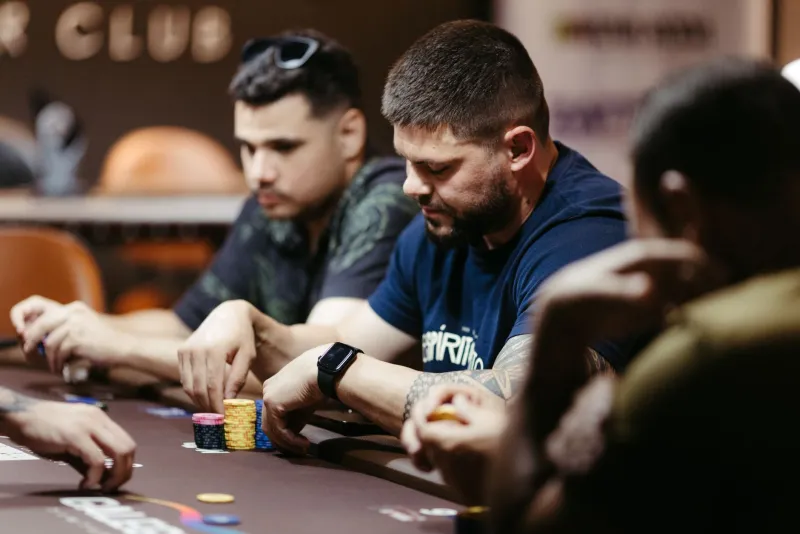
Chip handling is one of the most reliable involuntary tell clusters in poker. When someone has a strong hand and is genuinely excited, they tend to handle chips with more deliberate confidence — fingers move smoothly, stacks are pushed forward with quiet authority. When someone is bluffing or uncertain, you'll often see micro-hesitations: a slight tremor, a grip that tightens before releasing, or chips that get counted and recounted without any real purpose.
There's also the "reach tell" — the moment a player's hand drifts toward their chips before the action is even on them. That pre-emptive reach almost always signals genuine strength. They're already mentally committed to the pot. Bluffers, by contrast, tend to delay their physical commitment to the bet, because their brain is still running conflict resolution between the story they're telling and what they're actually holding.
Actionable fix: Develop a consistent, rehearsed way of handling your chips on every single bet — whether you're holding the nuts or complete air. Routine kills tells. Variation creates them.
Eye Movement: What You Look at Right After the Flop Matters More Than You Think
There's a well-documented phenomenon in behavioral research called "gaze direction under cognitive load." In plain English: where your eyes go when your brain gets busy tells observers a lot about what you're thinking.
At a poker table, the most revealing moment is the instant after the flop hits the board. A player who connects with the community cards often glances away quickly — a trained attempt to appear disinterested. Paradoxically, that fast look-away can be just as telling as a long stare. Players who missed the flop entirely tend to look at it longer, almost as if they're hoping it will change.
Eye contact patterns during betting rounds are equally informative. A bluffer who maintains aggressive, almost theatrical eye contact is frequently trying to project confidence they don't have. It's the poker equivalent of the guy at the gym who grunts loudest when lifting the lightest weight. Conversely, a player with a monster hand sometimes looks away from you entirely — they don't need to intimidate you, because the cards are doing the work.
Actionable fix: Pick a neutral focal point — the center of the table, your chip stack — and train yourself to return to it after every card is dealt. Break the habit of reacting visually to the board, regardless of what you're holding.
Betting Rhythm and Timing: The Clock Is Telling on You
This one gets overlooked constantly, especially by players who've moved between live and online poker. Timing is its own language.
A snap-call on a big bet almost always signals a draw or a marginal made hand — someone who decided their decision before they fully processed the situation. An unusually long tank before a raise often signals genuine deliberation, which tends to correlate with real strength (players don't agonize over whether to re-raise when they're bluffing — they either commit fast or bail). The middle ground, a moderate pause followed by a confident raise, is frequently where strong hands live.
Behavioral coaches who work with professional players talk about "timing consistency" the same way acting coaches talk about hitting your marks. Your goal isn't to tank every hand — that's exhausting and transparent in its own way. Your goal is to make sure your timing signature doesn't change based on hand strength. If you naturally take eight seconds before acting, take eight seconds every time.
Actionable fix: Time yourself in low-stakes sessions. Identify whether you act faster with strong hands (excitement response) or weak ones (avoidance response). Once you know your default, you can consciously correct it.
The Microexpression Problem Nobody Wants to Talk About
Here's where it gets a little humbling. Research pioneered by psychologist Paul Ekman showed that humans produce microexpressions — fleeting facial movements lasting less than a fifth of a second — that reflect genuine emotional states before our conscious mind can suppress them. We're talking about a flash of satisfaction, a flicker of disappointment, a barely-there wince.
The good news: most casual players aren't trained to catch microexpressions in real time. The bad news: experienced players don't need to consciously identify them. They've seen enough hands to pattern-match intuitively. That split-second reaction you had when the river card landed? A sharp opponent may not be able to name what they saw — but they felt it, and they'll act on it.
This is why seasoned players recommend what coaches call "baseline establishment" — spending the early orbits of any session doing nothing but watching how players behave in pots you're not involved in. You're not looking for tells yet. You're calibrating what "neutral" looks like for each person at the table. Once you have a baseline, deviations become obvious.
Reading the Table Without Looking Like You're Reading the Table
There's an art to observation that doesn't tip your hand as an observer. Staring at someone while they bet is amateur hour — they'll notice, adjust, and potentially use your attention against you. The better approach is peripheral awareness: keep your gaze soft and general, but let your brain process movement and timing without locking onto any one player.
This is a learnable skill, not a superpower. Athletes train peripheral vision deliberately. So can you.
Combine that with note-taking habits — mental or physical, depending on your game — and you'll start building player profiles surprisingly fast. The guy who always re-stacks after a bluff. The woman who goes quiet when she's got a big hand. The regular who talks more when he's weak. These patterns repeat. Poker players are creatures of habit, and habits are just tells in slow motion.
Your Edge Starts Before the Cards Are Dealt
At 888XBets, we're always talking about finding your edge — and at the poker table, the edge often isn't in the cards at all. It's in the information economy happening across the felt before a single chip gets pushed in. The players winning consistently aren't just the ones with the best hand-reading ability. They're the ones who've done the unglamorous work of understanding their own physical habits well enough to neutralize them, while staying sharp enough to catch what everyone else is leaking.
Tells won't win you every pot. But eliminating yours and exploiting others' will quietly shift the math in your favor over hundreds of sessions. And in poker, that's the whole game.