The Silent Killers at the Casino Table: What's Really Draining Your Stack Before You Cash Out
The Silent Killers at the Casino Table: What's Really Draining Your Stack Before You Cash Out
You've done your homework. You know the house edge on blackjack is somewhere around 0.5% with basic strategy. You know baccarat is one of the better bets on the floor. You've maybe even memorized a few key numbers for craps. So why does it feel like you're always walking out lighter than the math says you should be?
Because the house edge on the main game is just the starting point. There's a whole ecosystem of costs quietly running in the background every time you sit down at a table — and most players never stop to add them up. At 888XBets, we're all about giving you your edge, and that means being honest about the stuff that chips away at it when you're not paying attention.
Let's break it down.
The Table Minimum Trap
Table minimums seem like a simple thing — just the price of admission, right? Not exactly. The minimum bet at a table directly controls how fast the house edge grinds through your bankroll, and many players dramatically underestimate this relationship.
Here's the thing: a $25 minimum blackjack table isn't just five times more expensive than a $5 table in the obvious sense. It also means every deviation from perfect play — every moment of fatigue, distraction, or borderline decision — costs five times as much. The margin for error shrinks while the stakes climb.
Casinos on the Las Vegas Strip and in Atlantic City have also been quietly raising their minimums over the past several years, especially on weekends and during peak hours. That $10 table you counted on? It might be $25 by Friday night. If you haven't budgeted for that shift, you're either playing above your bankroll or hunting for a seat at a crowded lower-limit table — both of which carry their own costs.
The smart move: know your minimums before you sit, and factor the actual betting pace into your session budget. A table running 60 hands per hour at $25 per hand is exposing you to $1,500 in action every sixty minutes. Even a razor-thin house edge adds up fast at that volume.
Side Bets: The Casino's Favorite Profit Center
If there's one place where casinos quietly print money, it's the side bet. That little circle on the felt labeled "Lucky Ladies" or "21+3" or "Perfect Pairs" looks harmless — it's just a few extra bucks for a shot at a big payout. What the felt doesn't tell you is that most side bets carry a house edge between 3% and 13%, sometimes higher.
To put that in perspective: basic strategy blackjack gives the house roughly a 0.5% edge. The "Lucky Ladies" side bet — one of the most popular in the country — runs closer to 17% in some versions. You're essentially playing a completely different, much worse game every time you toss a chip into that circle.
Insurance in blackjack deserves its own callout here. It gets pitched as a way to "protect" a good hand, but mathematically it's a side bet with a house edge around 7% in a standard six-deck game. Card counters occasionally use it strategically. For everyone else, it's a recurring tax on good hands.
The discipline required here is real. Side bets are designed to be impulsive — they're cheap, they're fast, and the payouts sound exciting. But if you're tossing $5 into a side bet 40 times during a session, you've added $200 in action at terrible odds on top of your main game. That's not a small leak. That's a busted tire.
The Tipping Conversation Nobody Wants to Have
This one's uncomfortable, but it's part of the real cost of a table game session and it deserves an honest look.
Tipping dealers in the US is culturally expected. Dealers at most American casinos earn low base wages and rely on tips — called "tokes" in casino lingo — as a meaningful part of their income. That social context is real, and most experienced players tip without resentment. But it's also a cost, and pretending it doesn't exist doesn't help you budget accurately.
A common approach is to tip roughly $1 per blackjack or craps win, or to occasionally make a "dealer bet" — a wager placed for the dealer alongside your own. The problem is that in a fast-paced session, those tips accumulate quickly. If you're winning 40 hands in a two-hour session and tipping a dollar each time, that's $40 off the top of your winnings. At a $10 minimum table, that's four full bets.
There's no universal "right" answer here. Tipping is a personal decision, and stiffing dealers entirely tends to change the energy at a table in ways that aren't worth it. But building tips into your session budget — rather than treating them as an afterthought — gives you a cleaner picture of what a night at the felt actually costs. Think of it like budgeting for parking and drinks. It's part of the real price of the experience.
The Cocktail Creep
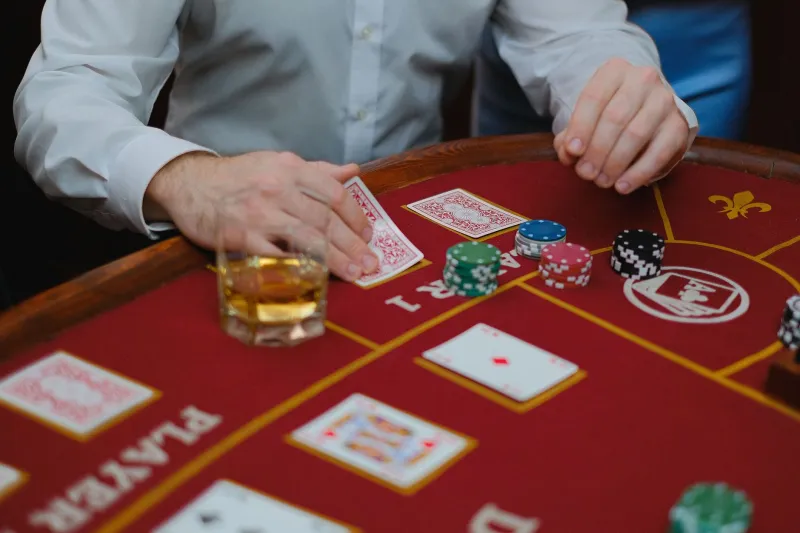
Speaking of drinks — complimentary cocktails are one of the casino's most effective tools, and not just because alcohol clouds judgment. The simple act of waiting for a drink, flagging down a server, and tipping (there it is again) breaks your rhythm and keeps you at the table longer than you might otherwise stay.
The cocktail isn't free. It's an investment the casino makes in your continued presence. A longer session means more hands, more side bet opportunities, and more exposure to the house edge. Factor that into how you approach a night out.
Building a Honest Session Budget
Here's what an accurate pre-session budget actually looks like for a recreational player:
- Main game bankroll — what you're comfortable losing on the primary bet
- Side bet allowance — a hard cap, if you're going to play them at all
- Tipping estimate — roughly $20–$50 depending on session length and stakes
- Drinks and incidentals — yes, even the "free" ones carry a tipping cost
When you lay it all out, a $200 blackjack session at a $25 table might realistically cost $250–$280 once the full picture is accounted for. That's not a reason to stay home — it's a reason to walk in with clear eyes.
The Bottom Line
The house edge on the main game is just the headline number. The real cost of a casino session is a composite of a dozen smaller decisions — the table you choose, the side bets you can't resist, the tips you hand across the felt, the drinks that keep you glued to your seat. None of these things are secrets, exactly. But casinos don't exactly advertise them together.
At 888XBets, your edge is the whole point. And your edge starts with knowing exactly what a session costs before you ever stack your chips.